Lakeside Acreage
What should I check about lake frontage before making an offer?
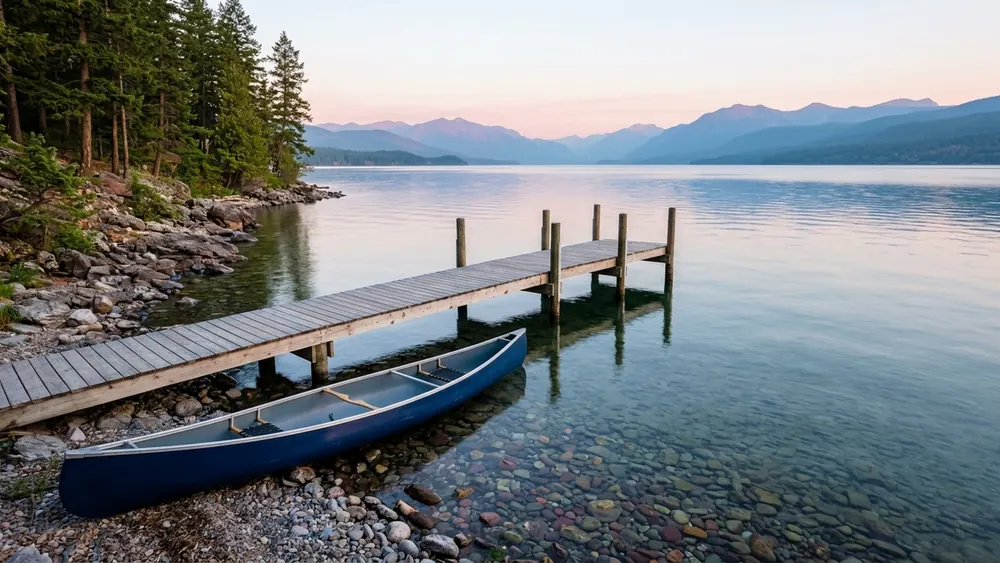
Check what the frontage actually includes, where the boundary sits, how you reach the water, and what records exist, then take every shoreline and water question to the county and a qualified specialist before you make an offer.
On this page
- What to check, in plain terms
- Why frontage needs its own question list
- Questions about the boundary and the water
- Structures and changes along the shore
- Records to request before you offer
- A simple map of who answers what
- Seeing the shoreline in more than one season
- Your next step before making an offer
What to check, in plain terms
Before making an offer on a lake property, check what the frontage actually includes, where the property boundary sits in relation to the water, how you reach the shoreline, and what records exist for any structures along it. Then take every shoreline and water question to the county and a qualified shoreline or water specialist. A listing description is a starting point, not an answer.
Why does this matter? Frontage is often a large part of why a buyer wants a lake property in the first place, so it deserves the same care as the home itself. If you assume something about the shoreline that turns out to be different, it can change how you use the property, what you can change later, and how you feel about the purchase.
This article gives questions and sources only. It does not explain shoreline rules, water rights, permits or what any property allows. Those answers come from the county, state authorities in general terms, and qualified specialists who look at a specific property. The aim here is to help you build an organized list, so nothing important is left until after you have committed.
Why frontage needs its own question list
At Whitefish Mountain Resort, many questions about a home are answered in HOA documents. On a lake property, including on the north shore of Flathead Lake, more of the questions sit with the records, the county and the professionals you hire. Frontage is a good example. What looks simple from the deck can involve boundaries, recorded rights, structures and rules that only the right source can confirm for that parcel.
That is not a reason to avoid lake property. It is a reason to separate what you see from what you have confirmed. Walk the shoreline, take photos and notes, then turn each observation into a question with a name beside it: the surveyor, the title company, the county, a qualified specialist or a licensed home inspector. That habit keeps the process steady rather than rushed.
I would rather you ask one more question about the shoreline before the offer than wonder about it after closing. Write it down and find out who answers it.
Questions about the boundary and the water
Start with the line between the property and the lake. Ask where the boundary is described in the records and whether a survey shows it. A surveyor answers that for a specific parcel, and the county holds the property records. A title company reviews what is recorded against the property. Do not rely on where a lawn ends or a fence stops to tell you what you would own.
Next, ask what the frontage includes. Does the listing describe a shoreline, a beach area, a dock or a boat lift, and are those part of the sale? Ask the seller, through your agent, for any records about structures along the water, and take questions about them to the county and a qualified specialist. The answer for one property says nothing about the one next door.
Then ask about access to the water itself. How do you get from the home to the shoreline, and is that route on the property or across someone else’s land? Are there any shared or recorded rights that affect the frontage? A title company and, where needed, a real estate attorney explain what is recorded and what it means for you as an owner.
Structures and changes along the shore
Many buyers picture changes they would make along the water, from a new dock to work on the shoreline itself. Before you count on any of those plans, take them to the county and a qualified shoreline or water specialist and ask what applies to that specific property. This article will not tell you what is allowed, because that depends on the parcel and the current rules.
Existing structures deserve questions too. Ask what records exist for any dock, lift, boathouse or retaining work, and have a licensed home inspector and a qualified specialist look at condition where it matters. An insurance agent can help with coverage questions for structures near the water. Your lender may also have questions about the property, so share what you learn with them early.
Records to request before you offer
Gathering records before you write an offer gives you something solid to take to each professional. Ask your agent to help request what exists from the seller and to note what does not exist, since a missing record is also useful information. Having these in hand means each professional can start from the same set of facts, and you can see quickly where the open questions are. A short starting list:
- Any survey of the property, especially one showing the shoreline boundary
- Records for docks, lifts or other structures along the water
- The title commitment and any easements or rights recorded against the land
- Service and inspection records for the well and septic systems
Not every property will have every item. That is fine, as long as you know what is missing and decide with that in mind. Bring each record, or each gap, to the right source. A surveyor reads the boundary, a title company reads what is recorded, qualified well and septic professionals review those systems, and a qualified specialist looks at shoreline and water questions.
A simple map of who answers what
Matching each question to its source is the most useful step on a lake purchase. It keeps answers from the wrong person out of your decision, and it shows you which calls to make first when time is short. Here is a quick reference for frontage questions and who gives the official answer for a specific property:
| Question | Why it matters | Who to ask |
|---|---|---|
| Where is the shoreline boundary? | You know what you would own | A surveyor and the county records |
| What does the frontage include? | Structures and features may or may not convey | The seller’s records and a title company |
| Who has rights across the shore? | Recorded rights affect your use | A title company or real estate attorney |
| Can I add or change structures? | Your plans depend on what applies | The county and a qualified specialist |
| What water questions apply here? | Water matters vary by property | A qualified shoreline or water specialist |
Add the answer and the date beside each row as it comes back. Rules and records change, so a note of who confirmed what, and when, is worth keeping. If an answer is unclear, go back to the same source and ask again in writing, rather than filling the gap with an assumption. Your agent can help you phrase the follow-up.
Seeing the shoreline in more than one season
A lake property you first see on a bright summer day is worth picturing in every season. Ask how you would reach the home and the shoreline in winter, what upkeep the frontage asks of you through the year, and where boats, docks and gear would be stored. Conditions on the water and on roads are confirmed with local and state authorities, not assumed from a single visit.
If you cannot visit again, ask for photos from another season and add the questions only another season would answer. This matters most for a buyer from another state, who may be deciding from a distance. A clear list makes each visit and each call with a professional count, and it helps you compare properties on what you have confirmed.
Your next step before making an offer
Before you write an offer on a lake property near Bigfork or elsewhere on Flathead Lake, gather your notes on how you would use the frontage, your list of planned changes, the records you have received and the gaps you still have. Line up a surveyor, a title company, a licensed home inspector, qualified well and septic professionals and a shoreline or water specialist so each review fits your timeline.
Alexis’s co-listed work with teammate Stephanie Skinner has included a lake-area acreage home in Bigfork, and she can help you organize the real estate side: comparing properties, requesting records and keeping the question list in order. The official answers come from the county and the specialists named here. Which frontage question feels least settled for you, and would it help to bring it to Alexis before you make an offer?
This article is general information about buying and selling property at Whitefish Mountain Resort and around the Flathead Valley, Montana. It is not legal, tax, lending, valuation or inspection advice and does not predict prices or promise results. Confirm HOA and rental rules with the HOA and the local authority, land, shoreline and water questions with the county and qualified professionals, financing with a lender, and title with a title company. Alexis Waite Kennedy, Glacier Sotheby’s International Realty.

Written by